 maratool
Why I built maratool, and why it’s open source now
maratool started as a pile of small browser-based tools I kept building for myself. Today the source is on GitHub and contributions are open.
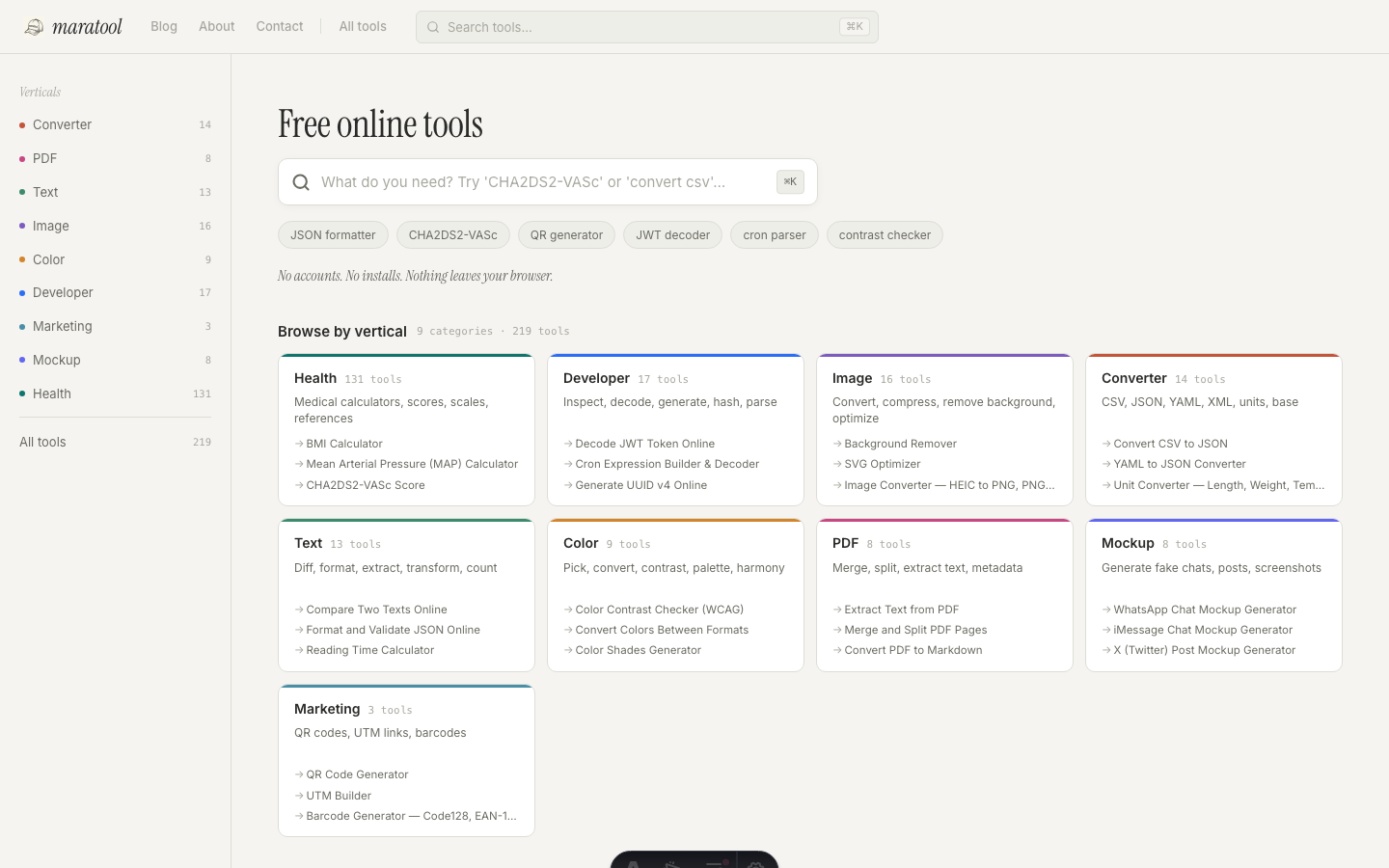
There’s a class of task I keep running into. Calculate a percentage I’m too lazy to do in my head. Strip the background off an image or a GIF. Throw together a phone mockup. Stuff you don’t want to install an app for, and definitely don’t want to make an account for.
For years I’d just google whatever site did the thing, click around, ignore the ads, copy the result, close the tab. Then repeat the search next week because I’d forgotten which site I used.
“But you can do all of that with an AI now.”
You can, sometimes. The thing is, AI isn’t always good at it. Background removal on a GIF comes back a little different from what you put in: tiny color shifts, soft edges, a frame that doesn’t quite match the rest. Then there’s the cost. Paying tokens to calculate percentages or pull text from a PDF feels insane when both are deterministic problems that ran fine on a 1995 laptop. And a lot of what you’d paste in is private. I personally don’t mind much, but I know plenty of people who don’t want their data going through an OpenAI endpoint just to extract text from a contract PDF.
So maratool runs entirely in your browser. PDFs, images, GIFs, JSON, passwords, all of it lives on your machine, gets processed there, and stays there. Nothing is uploaded anywhere.
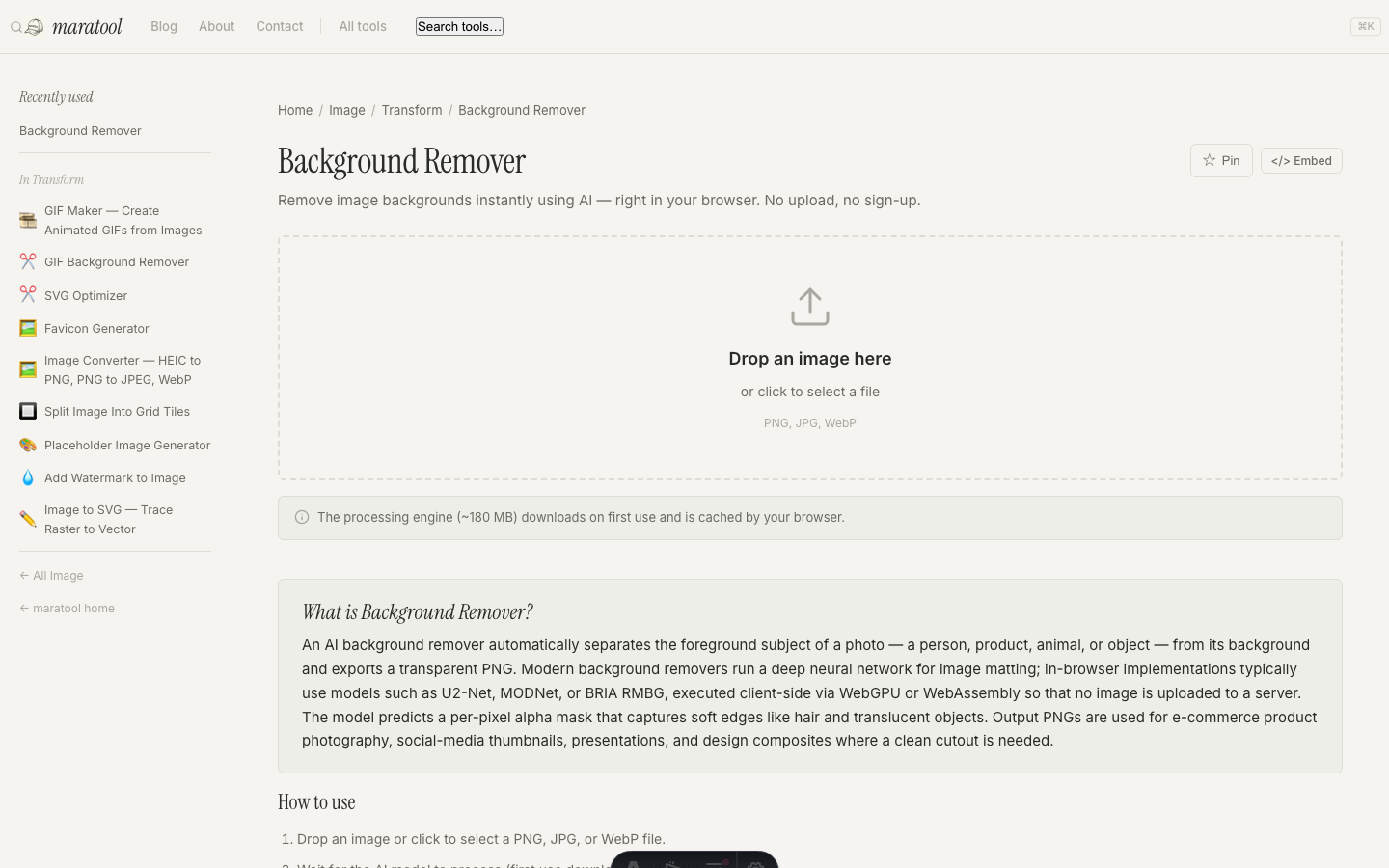
That’s what the site grew out of, a pile of things I wanted for myself. At some point keeping it private stopped making sense. So today it’s open source.
The other thing that pushed me there
The health calculators. There are over a hundred of them on the site now: eGFR, MELD, qSOFA, CHA2DS2-VASc, the Lille model, a stack of pediatric scores. I am not a doctor. The reason any of these exist is that a friend who is one mentioned a couple he’d want at the bedside. Once I’d built those two I figured I’d do the rest properly. Implement each formula from the original paper, unit-test it against published worked examples, cite the source on the page.
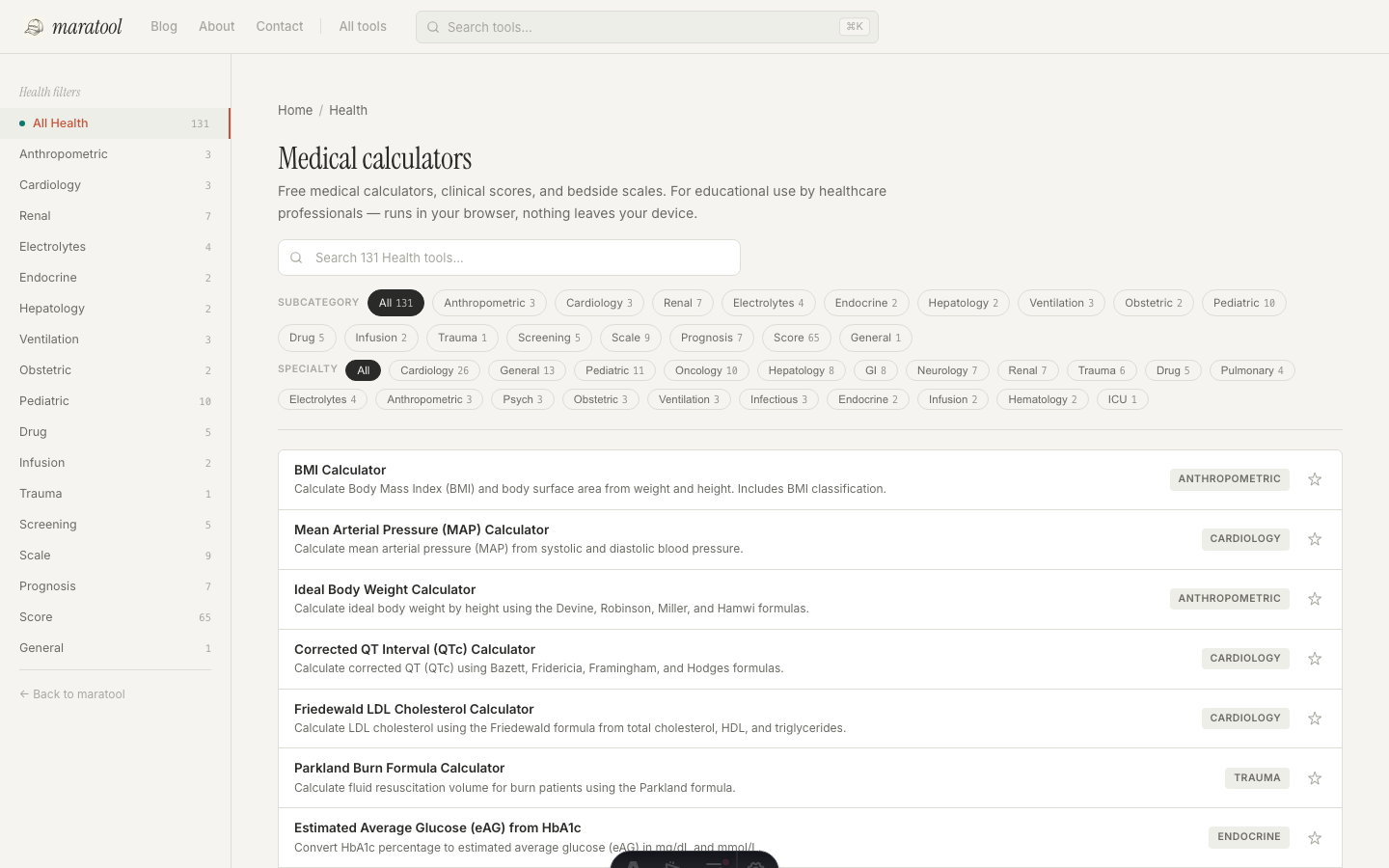
That whole category should not have come from one person. It is the kind of thing the project needs more of. Tools I would never write because I do not work in the field. Fixes from people who actually use what they touch. Calculators I have not thought of yet.
Where it is now
A pile of small browser-only tools, growing. The math is right, your data does not leave the tab, and the source is on GitHub. If there is something you wish existed, or something that is there but a bit off, the repo is open. PRs welcome.